Psychological Well-being: Design Principles for Calming, Stimulating, and Restoring (LID: 2676)
3 HSW CE Credits - AIA # DAS504-25 - IDCEC # 124780 - FL BOAID # 9879323 - LSBID # 11.1267.25
03
Minimalism can be a form of deprivation. For the brain, blank walls and no texture is not calm. It is starvation.
Psychological Well-Being
How can design support emotional regulation, restore balance, and facilitate psychological recovery? This session explores the science of color perception, micro-restorative spaces, and user agency to understand the significant impact subtle design choices have on emotional resilience. Drawing on neuroscience, environmental psychology, and sensory design, you will identify patterns that foster calm, clarity, and connection. You will leave prepared to apply these principles across typologies including schools and hospitals, with a deeper understanding of how color, texture, light, and layout contribute to mental well-being. Because healing does not just happen in clinics. It happens wherever people live, learn, and gather.
- Color, light, and emotional regulation
- Nature views, ventilation, and measurable healing outcomes
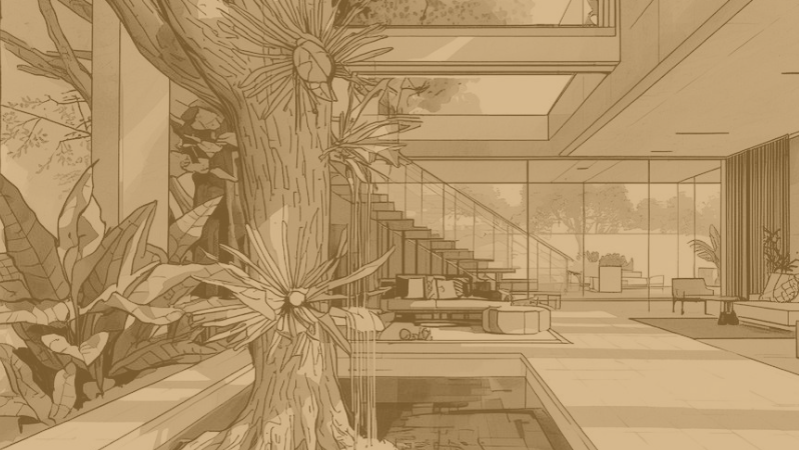
- Biophilia, fractal patterns, and designing for sensory richness

Natalie Jorge
Natalie Jorge is a Brazilian architect with professional experience in both the United States and Brazil. Her work focuses on how architecture influences human behavior, mental health, and social well-being — drawing from neuroscience, psychology, and environmental ethics. She also integrates classical design principles to promote balance, beauty, and a sense of belonging in the built environment. Natalie holds a Master of Architecture from the University of Colorado Denver and a Certificate in Classical Architecture from the Institute of Classical Architecture & Art (ICAA). Now based in São Paulo, she leads an independent practice dedicated to human-centered, health-oriented design.